Unas palabras
Curvum
La escocia (del latín scotia y éste del griego antiguo σκοτία, "oscuridad", "sombra"), es una moldura cóncava, compuesta de dos curvas de diferente radio. El arco inferior es el de mayor tamaño.
Su nombre proviene de estar presente en la basa griega de las columnas de orden jónico, producía un efecto que pronunciaba sombras y claros transmitiendo expresividad y movimiento.
La moldura en escocia aparece definida en la tabla 29 del libro Regola delli cinque ordini d’ architettura (1562) de Jacopo Vignola.
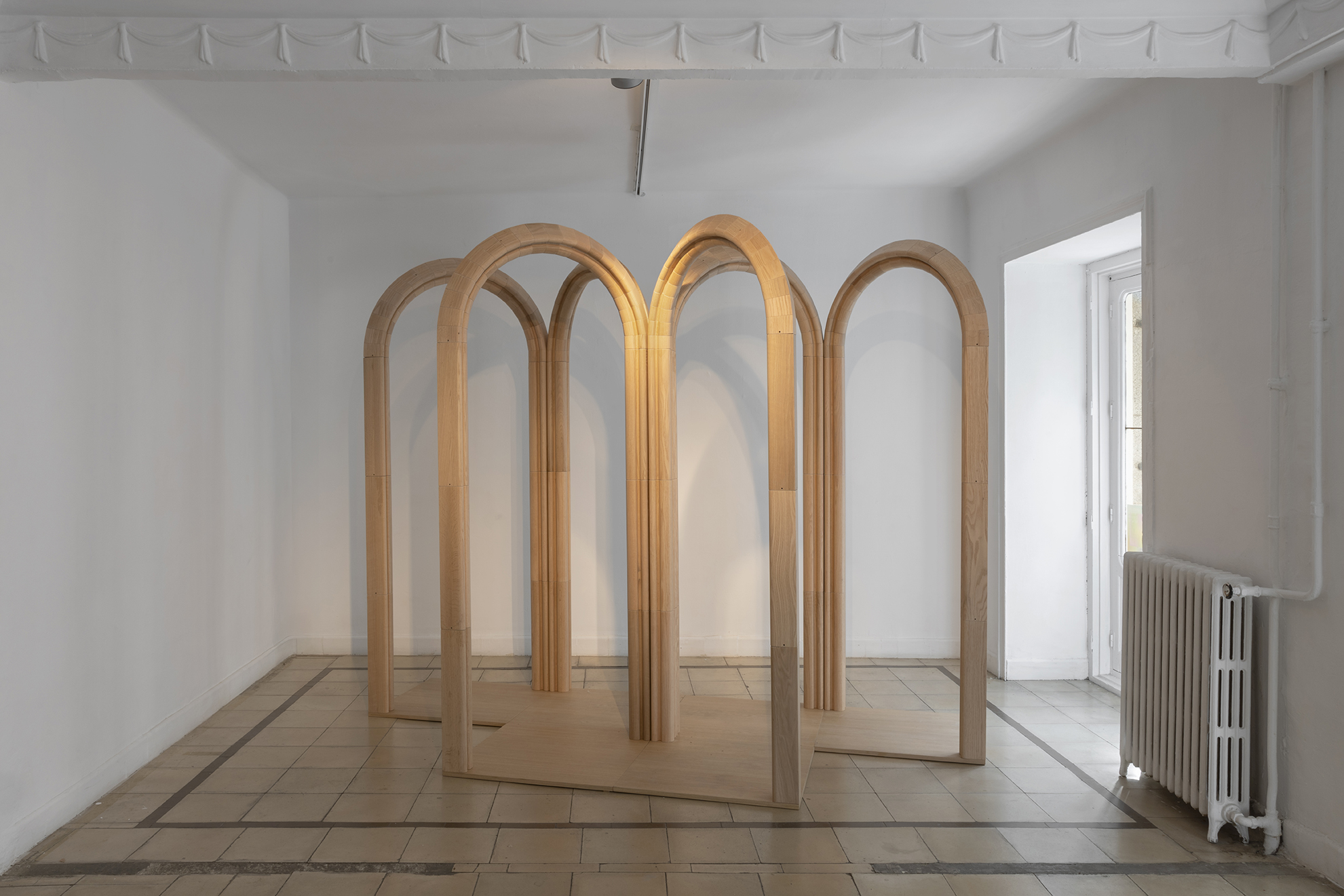
Arquitectos como Guastavino, Gaudí y posteriormente Antonio Palacios, dedicaron mucho tiempo a sistematizar estos elementos para poder utilizarlos de forma modular. Inspirada por ellos, reinterpreto ese elemento clásico para sistematizar la junta y la curva perdida.
La modernidad enderezó al mundo y llamó virtud a la arista desnuda. Se perdió la curva, y la vida de los materiales se acortó por el diseño.
Se eliminaron elementos clásicos en favor del almacenaje, el transporte y la economía.
Se creó un mundo ortogonal, un sistema de ensamblaje de elementos de producción estandarizada. Identificados (erróneamente) como ornamentos prescindibles, su eliminación simplificó la construcción, produciendo deficiencias de calidad y durabilidad.
Esto alimenta la industria actual que fomenta el consumo. No interesa que nada dure.
Los recursos son limitados. Reparar debería ser menos costoso que sustituir. El conocimiento de cada artesano, acumulado durante generaciones, es parte del patrimonio vivo de un país.
Hoy queda en desuso, olvidado y perdido por una industria que premia la velocidad, la cantidad y que hace innecesaria la formación y el entrenamiento. Es una industria que castiga la destreza acumulada por la experiencia. La tecnología es parte de la evolución. Debemos utilizarla siempre que no distorsione la percepción de nuestra inteligencia.
Vivimos anestesiados por las pantallas, olvidando siglos de conocimiento y capacidad de concentración, por creer que somos más inteligentes de lo que en realidad somos.
La exposición recorre diferentes conceptos, escenarios, técnicas, materiales y escalas, donde la solución constructiva de la curva es la protagonista de la obra.
Bárbara Pérez Marina