Unas palabras
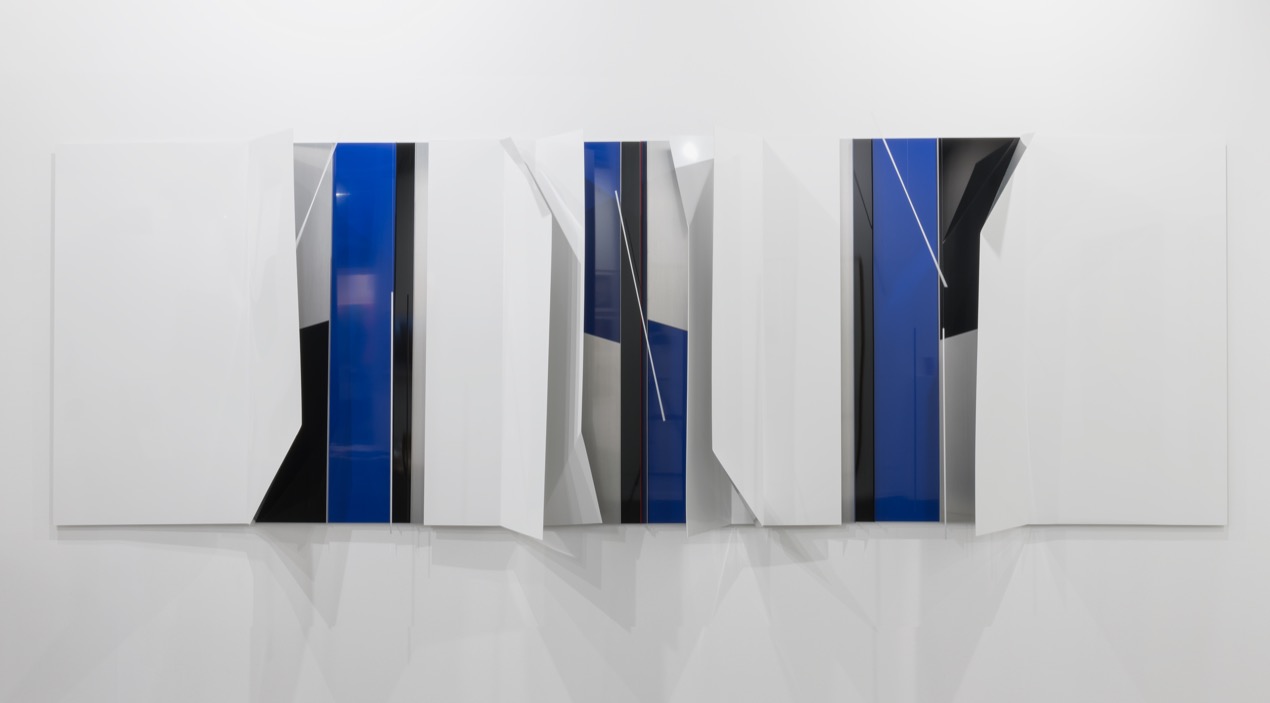
Vislumbrar el proceso de una gran obra es lo que Robert Ferrer tan generosamente nos brinda en esta exposición: mostrando los planos, las maquetas e instantáneas de distintos momentos en los que se puede apreciar como los aluminios se van desplegando hasta alcanzar su equilibrio y potencia poética.
Una de las particularidades de Robert Ferrer es la importancia que le da al trabajo manual. Esa frescura tan singular que tiene su obra dentro de una tradición tan analítica como la geometría está directamente relacionada con el pensamiento de la mano, con esa férrea voluntad de manufacturar él mismo todas y cada una de sus obras.
Por eso invito a todo aquel que tenga la fortuna de estar disfrutando de esta exposición a contemplar todas y cada una de sus partes no solamente como las fases abstractas de un proyecto sino como el desenvolvimiento manual de alguien que dobla, apunta, corrige, compara, sujeta, pega y manipula el espacio.
Nuestra mente cada vez más informatizada olvida aquellos ámbitos en los que el resultado no es la mera ejecución de un plan. Al igual que un ser vivo es algo más que el desarrollo matemático de sus genes, en el arte es muy importante todo lo que ocurre en medio.
Es ese lugar misterioso que hay entre la intuición y la manipulación, entre el plan y el resultado donde nacen y se despliegan nuevos mundos, es ahí donde radica la diferencia entre técnica (τέχνη) y tecnología.
Robert trabaja siempre mediante el desarrollo de familias en las que una nueva idea aparece, permuta, se multiplica, se desarrolla y da lugar al nacimiento de una nueva familia. Todo esto ocurre con un tempo muy particular, con sus variaciones, escalas y leitmotivs.
Tras un recorrido multidimensional sobre las diferentes procesos creativos concluimos el recorrido con la obra, la única obra sobre la que órbita esta exposición en concreto.
Contemplándola, uno se imagina que alguien ha abierto un espacio en la pared para mostrar aquello que estaba oculto. Junto a las aberturas espaciales y cromáticas, unas finas líneas de aluminio oscilan en equilibrio inestable con la lentitud e intensidad de una perpetua búsqueda de significado.
La geometría, al igual que la música, cifra a mi entender un gran misterio que pone en juego matemática, percepción, sentimiento e intelecto; quizá por eso Schopenhauer argumenta que si lográramos resolver el enigma de la música, resolveríamos el enigma del universo.
Comprender por qué la ligera inclinación de un cuadrado sobre otro puede hacernos vibrar está más allá de nuestro alcance y quizá es mejor que así sea. Las manos de Robert como las de un pianista, saben, exploran y comparten un universo en el que podemos, temporalmente y en silencio, repensarlo todo de nuevo.
(Jacobo Fitz James Stuart en el catálogo de la exposición)