Unas palabras
Robert Ferrer i Martorell, valenciano de 1978, y mallorquín de adopción, ha sido el artista elegido por el In- stituto Cervantes para confiarle su espacio expositivo, en este final de temporada 2015-2016. Como al final de la pasada sucedió con El Tono, artista callejero francés que ha desarrollado gran parte de su carrera en España, de lo que vuelve a tratarse es de que un creador de nuestro tiempo se enfrente a nuestra sala de exposiciones, proponiendo una intervención en ella. Paralelamente, la galería Lina Davidov, sita en el histórico boulevard Saint-Germain, especialmente receptiva a la escena artística española, y que desde que lo fichó en 2010, es una de las que ha estado más atenta al quehacer del artista, propone la cuarta de las individuales que le ha dedicado hasta la fecha: una selección de algunas de sus piezas recientes de pequeño formato, es decir, de relieves y cajas de metacrilato ante las cuales se entiende que su trabajo es de raíz geométrica, pero que esa geometría es compatible con la libertad y con la poesía.
Formado en la Facultad de Bellas Artes de su ciudad natal entre 1998 y 2004, Ferrer i Martorell empezó a exponer en 2000. En su tierra lo ha hecho en la Llotgeta, en Mallorca en Joan Oliver Maneu, en Madrid en ese sitio tan vivo que es Espacio Valverde, que además lo está llevando a ferias internacionales...
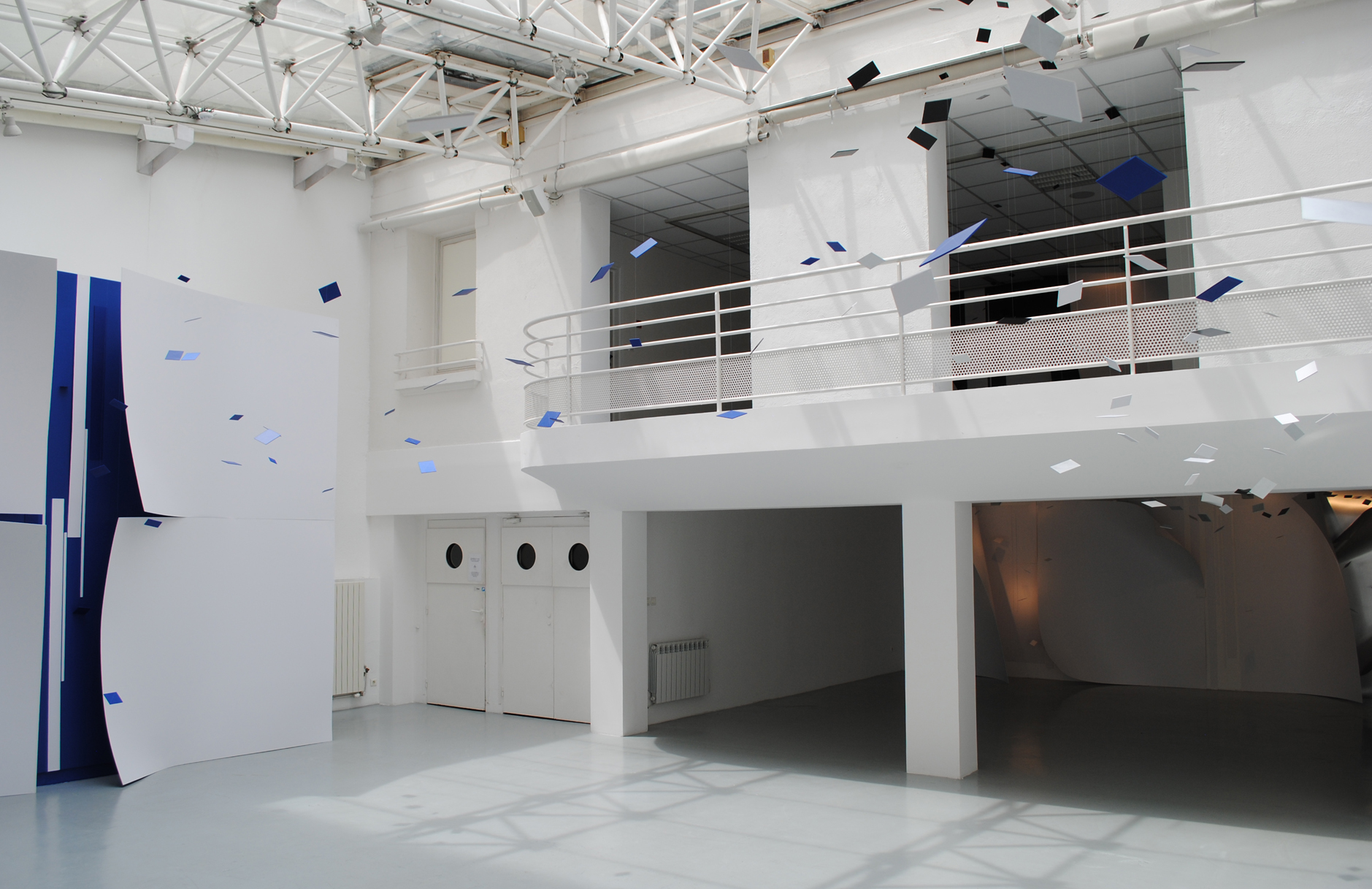
Esta instalación, titulada, algo metafísicamente y también cabría decir que algo kleeianamente –aquello de “tornar visible lo invisible”, etc-, Porta oberta a l’invisible, no es ni mucho menos la primera de este artista. Las ha presentado en su isla adoptiva, y en Madrid, y en Valencia, y cabe recordar en ese sentido que ha salido airoso del reto de enfrentarse a espacios venerables, por ejemplo, en 2011, Can Prunera, en Sòller, o moder- nos, por ejemplo, al año siguiente, el Atrio de los Bambúes del Palacio de la Música de Valencia.
Variante de nuestro título cervantino es el de la muestra en la galería, donde ha querido ser todavía más conciso: Porte à l’invisible. (En 2015, su exposición en el mencionado Espacio Valverde, se titulaba Fragmentos de lo invisible).
Al poco tiempo de acordar con él el principio de una instalación en nuestra sala, recibimos de Ferrer i Martorell un proyecto detalladísimo, con infografías. Aunque algunos detalles los ha modificado sobre la marcha, en el calor de la acción y manifestando una libertad que necesita para no caer en dogmatismo alguno, me sorprende que haya relativamente pocas diferencias entre proyecto, y obra acabada. El único otro de los artistas con los cuales he trabajado, al cual recuerdo tan metódico en su modo de enfrentarse a un espacio, es el pintor suizo Helmut Federle, aunque en ese caso no estamos hablando de un instalador, sino de alguien que lo que estudia al milímetro es el encaje de sus cuadros en el espacio expositivo que se le propone ocupar.
Podríamos muy bien haber planteado el presente catálogo, a partir de las infografías, pero de común acuerdo hemos decidido retrasar un poco su salida, para poder utilizar en él algunas de las bellas fotografías, tomadas por él mismo, de la propia instalación.
Básicamente, Ferrer i Martorell es un geómetra, pero un geómetra... lírico. Lo cual permite poner en relación su poética, especialmente la que opera en sus relieves y cajas, con la de Miró o la de Mompó, otros dos pintores de destino balear, al segundo de los cuales hemos presentado no hace mucho en este Cervantes, aunque en la muestra que le dedicamos no figurara ninguna de sus piezas de plexiglás.
Partiendo de la ortogonalidad, Ferrer i Martorell desemboca en planteamientos más orgánicos, incluso, por momentos, podríamos decir que gestuales, de ahí que en nuestra mente, ante el tipo de piezas a las cuales acabo de aludir, surgieran los nombres del más pintor de los surrealistas, y del más “aire de la calle” y Jour de fête de nuestros abstractos de la generación del cincuenta.
“Miembro de la cofradía de los artistas amigos del aire” he llamado en otro lugar a Ferrer i Martorell, pensan- do en su inscripción en una tradición que es la de las construcciones de Gabo o de su hermano Pevsner, la de los móviles de un gran amigo de Miró como fue Calder, la de los plásticos traslúcidos de Vantongerloo o de Moholy Nagy, la de las escenografías de Noguchi, la de los neones monumentales de Fontana, la de los penetrables de Soto... En creadores como estos, y está claro que la lista podría alargarse mucho más –hasta llegar, por ejemplo, a las obres febles de Antoni Llena, de lo mejor que dio el conceptual catalán-, geometría y organicismo no son términos contrapuestos...
Una palabra a la cual Ferrer i Martorell es especialmente aficionado, es la palabra EXPANSIÓN. Su trabajo con el espacio –el espacio como si fuera un “material” más-, su manera de plantearse Ritmos en el espacio, es un trabajo riguroso y sensible, de modulación de todos los ingredientes que coadyuvan al resultado final.
La luz es otro de los “materiales” –creo que se entiende que vuelva a insistir en las comillas- de predilección de Ferrer i Martorell. A menudo los títulos de sus muestras y de sus instalaciones, se han referido a ella La palabra LUZ a los poetas les tienta casi en demasía: algunos parecen espolvorearla un poco al tuntún. Los pintores suelen ser más estrictos, y la suelen manejar en sentido figurativo: evocación de luces contempladas en la naturaleza. Pero no hay que olvidar la capacidad de los artistas cinéticos, que no son exactamente pin- tores ni tampoco exactamente escultores, para incorporar a sus creaciones la luz real, y de un modo especial la luz eléctrica, es decir, artificial, y en ese sentido en clave hispánica hay que recordar, durante la pionera dé- cada del cincuenta, las Cajas de luz, con sus bombillas y todo, de un inolvidable pintor y escultor alicantino que aprendió mucho en el París fifties, Eusebio Sempere. A este, por cierto, hizo una referencia muy admirativa su paisano en nuestro salón de actos, en el coloquio previo a la inauguración, citándolo como uno de sus ídolos. Y de paso mencionó también con elogio a Pablo Palazuelo, otro creador inolvidable, geómetra por libre de la misma generación que el anterior, y también parisiense de adopción, en su caso durante bastantes más años. En nuestra sala, Ferrer i Martorell se ha planteado una instalación que la contempla como un todo, como un contenedor a intervenir, y efímera como suelen serlo casi todas las instalaciones creadas específicamente para una sala de exposiciones. Interviene y transforma varias de sus paredes, tanto en la planta baja, como en la entreplanta. Además, hace flotar en el espacio de la sala, a modo de dibujo en el espacio, una serie de diminutos cuadrados de PVC colgados de hilos casi invisibles, cuadrados móviles –sombra de Calder- que marcan un camino de escape hacia la escalera, donde se integran en lo que podríamos contemplar como una columna virtual en ascensión.
El resultado de la intervención en las paredes es de una buscada elementalidad. Riguroso y a la vez libre, en él se combinan ortogonalidad, y organicismo, o lo que es lo mismo, líneas rectas, y curvas. PVC y planchas metálicas dialogan armónicamente. El PVC es curvado y tensado por hilos de nuevo casi invisibles, en un juego que por momentos hace pensar en una suerte de trabajo de despojamiento, de quitarle la piel a la pared... Todo esto trae a mi memoria el título de su muestra de 2013 en la galería de Lina Davidov: Dévoilant la matière. Trabajo este de ahora a mitad de camino entre la pintura, y la escultura, o para ser más exactos, el bajorrelieve. Trabajo con algo de schwittersiano, por el lado Merzbau, y no hay que olvidar que el de Hannover operaba en el quicio entre Dadá y constructivismo. Trabajo con algo de ruso, por el lado de los Proun de Lissitzky o de los arquitectones de Malevich, y estoy citando a dos artistas cercanos a Schwitters, y en los cuales fue todavía más fuerte que en él la tentación de la arquitectura. Trabajo con vocación de quedarse, y ciertamente uno se imaginaría muy bien alguna de estas piezas monumentales de Ferrer i Martorell, permanentizada, convertida en muro: sobre todo la de mayores dimensiones, la que el espectador se encuentra a la izquierda al entrar, para mí la más fascinante y la más impresionante, casi con algo de puerta micénica, y también la más ortogonal, pero en la cual, como en todas las demás, la ortogonalidad está en diálogo con las líneas curvas, y lo monumental, con un trabajo más dibujístico, esos trazos verticales, flotantes, que son como el eje de la construcción...
De luminoso acabo de calificar el contenedor expositivo que hemos puesto a disposición de Ferrer i Mar- torell. Efectivamente la luz es utilizada y modulada por él con gran inteligencia. Aquí estamos hablando de luz natural, la que entra por la amplia cristalera de nuestra hermosa sala. En algunas partes de la misma se combina esa luz con la que proyectan unos focos, necesarios sobre todo en la entreplanta, y sobre todo al final del día. La palabra LUZ es una de las más recurrentes en los títulos que pone el artista a sus piezas, a sus instalaciones, a sus muestras. Si La llum de l’horta parece sugerir una lectura paisajística, de evocación del fértil paisaje que rodea a su Valencia natal, otro título, Rastres de llum, invitaría a contemplar las cosas en clave más genérica. Volvemos a una cierta figuración con La memòria de la llum, y con Llum en extinció, títulos ambos de neto matiz crepuscular, que me recuerdan otros dos, Llum que s’apaga, y sobre todo, L’horabaixa, elegidos en su día por un pintor de una generación anterior, José María Sicilia, post-minimalista que tras largos años aquí en París, terminaría eligiendo la Isla de la Calma como su tierra adoptiva. Pero al final lo que reina en el caso de Ferrer i Martorell es El silencio de la luz.
Un tercer y último “material” –últimas comillas, lo prometo- en juego en esta instalación, es el color. Si en ti- empos Ferrer i Martorell gustaba de jugar sobre todo con los tres primarios, tan programática y eficazmente reivindicados en el alba de la modernidad por Mondrian, ahora el rojo y el amarillo han desaparecido del mapa, y con ellos esa jovialidad mironiana que apreciamos en otras fases anteriores de un artista que hoy aspira a todavía mayor pureza. Todo queda pues reducido aquí al diálogo entre el azul, el negro, y el blanco. Con neto predominio de este último.
La poética de Ferrer i Martorell, más cercano que nunca, sí, al blanco, es por supuesto una poética miesiana, es decir, una poética post-minimalista del “less is more”, pero es también una poética del fragmento, de la ingravidez, de la fragilidad. Su obra, que se abre en muchas direcciones, y que si la repasamos a fondo –por ejemplo vía su muy bien planteada página web- resulta de una gran diversidad formal, debe ser puesta en relación, además de con la de los “amigos del aire” a los cuales he hecho referencia casi al comienzo de mis palabras, con la de otros creadores sutiles, capaces de conferirle temblor poético al trabajo de la geometría. Ahí podríamos hablar, por ejemplo, de alguien al cual uno ha alcanzado a conocer aquí, cuando se acercaba a centenario: Luis Tomasello. O de un italiano silencioso que venía de la metafísica y se encontró en su camino con el ejemplo albersiano: Antonio Calderara.
Hablábamos Ferrer i Martorell y yo, en nuestro salón de actos, de artistas que le han marcado. Ya he dicho que en la conversación salieron Palazuelo, y Sempere. Además, mencionaba yo el hecho de que por su modo de combinar geometría y organicidad, lo veo –ya lo escribí en mi texto de 2013- como un hermano espiritual de ciertos geómetras brasileños, y él me contestó hablándome de su fascinación por la obra de uno de ellos, Macaparana, reciente expositor en la galería de Denise René de la Rive Gauche, es decir, a siete portales de la sala de Lina Davidov. No he visitado todavía el taller palmesano de Ferrer i Martorell; lo conozco, sin em- bargo, por fotografías tomadas por él mismo, en alguna de las cuales por cierto juega un papel fundamental la luz natural. Sí he estado, en cambio, en el piso alto de Macaparana en la Paulista, y en su vecino estudio en una callecita cercana a la gran arteria de la megalópolis brasileña. Macaparana y Ferrer i Martorell tienen bastantes cosas en común, empezando por su amor por el dibujo en el espacio, y por el orden que reina en sus respectivos laboratorios de constructores-soñadores. Del de Ferrer i Martorell, que también es capaz de trazar un retrato íntimo del caos (Portrait intime du chaos se tituló su primera individual en París), salen obras de belleza esencial como las que ahora ha expuesto en la galería de Lina Davidov, y en él se gestó, vía maquetas y vía las antes aludidas infografías, el proyecto que tan eficazmente ha realizado en nuestra sala, y que documentan sus propias fotografías en este catálogo.
Juan Manuel Bonet