Individual
Organon
Enrique Yáñez
01 May 2021
Unas palabras
ENRIQUE YÁÑEZ, ORGANON.
Espacio Valverde, Madrid.
El «habitar» como sistema de diferenciación inequívoco: esto puede ser el 'habitarse'. El habitarse como visualidad y representación es, además de vivencial y experimental, incluso empírico por la trascendencia temporal que supone el des-habitarse posteriormente tras la franja o quiebra de la desaparición, de la pérdida de la materia, de la extinción del cuerpo. Extinción, que no silencio: el silencio es la oclusión o negación de lo que no ha sido ni preexistente o pretérito. El silencio es debilitante y violento.
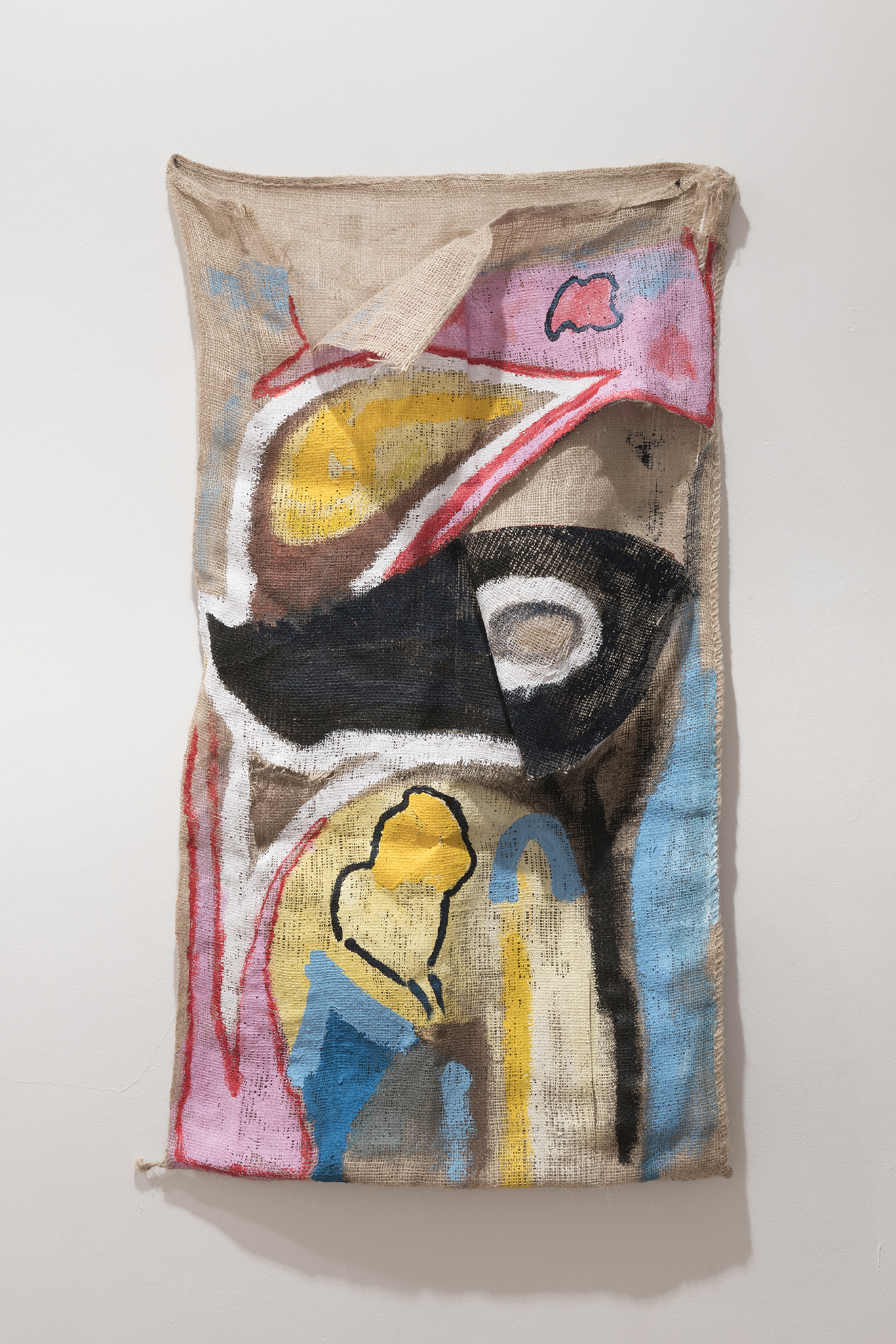
Organon es un cuerpo de pintura proposicional, y primero entre las completitudes de una obra que desde la materia bruta complica los posibles significados de lo que son las vertientes proclives a la no estandarización de la creación en objeto tangible. Lo tangible no es solo el tacto, es también el procedimiento actor que lo provoca, y ese procedimiento se arranca en un deseo. Cuando en 2019 me acompañó en una exposición coral en A Coruña (Atracción y resistencia), fue el 'órgano' de su trabajo lo que fundamentó una experiencia vital precedente. Si el símbolo de ese trabajo partió de una fundamentación en la que el 'paisaje' fue sobreentendido e interferido por lo intelectual, ese mismo 'paisaje' resultó la organicidad de implicación con la memoria y, por tanto, con la pre-existencia.
Que Organon digiera tres estancias como pasadizos hacia la aporía aristotélica del «hacer presente lo que está ausente» («Referencia», 2020; «Habitare», 2020; «De Anima», 2021), produce una asimilación nutricia de aquello que puede ir más allá de la comprensión o de la actividad conocedora de quien mira y ve y observa, y se detiene. La detención del tiempo intelectual aviva la personalidad diferencial y actuante de quien mira y observa siendo observante de su existencia. La existencia, además de la materia, y de la circunstancia inmediata de su reconocimiento, es también la multiplicidad de la imaginación y de la sensibilidad que le trasfieren su causa de ser, que es Ser. Por ello, el 'habitar' es el 'alma' de toda 'referencia', y este hilván de tres palabras organizan un 'hogar' donde la perseverancia desvanece la inoportunidad del no-reconocimiento.
Organon no es solo un registro del 'habitarse en el tiempo', o de 'habitarse en un tiempo'. No es la «traza» de Derrida, que quizá simplifique como huella aquello que debiera ser más que una solución para un origen reanimadamente primario, una cadena de continuidades (por muy histórico-estructural que sea esta): es una compresión sobre capilaridades texturizadas aplicadas en pigmentos, sin explicaciones vagas, atisbadas, contraídas y refugiadas en apoyos visuales desinteresados. Esas inflexiones desde lo aparente puede que no se atraviesen (y se atrevan) con los crecimientos que en sí se contienen y que desde ella se recrecen y se otorgan 'de sí en mí' (en cada uno como 'no-diviso en su autoridad' –y en su deseo– ). Se supera la traza valorando las disyuntivas de implicación, de seguimiento y de superación, un modo-núcleo para seducirse por la obra, por la creación, por lo que pueda llegar a ser 'artístico' como validación más allá de lo adjetivo. Las tres 'punciones' de Organon pronuncian las atonalidades afluentes de las metáforas y de las complejidades que en ellas se asientan. Yáñez aplica una funcionalidad deíctica a su pintura, una trasposición de la comprensión en memoria y de su regreso a su conocimiento expandido entrevisto entre las articulaciones y modulaciones de la pintura. La agresividad de la pintura que se ortografía en una cadencia pulsada de radicalidades formales que no condicionan su lectura a un simple detenimiento de banalidad insustancial y no sustantiva. La formalidad carece de memoria, y la formalidad no es precisamente una deudora de lo orgánico, sino de la autocomplacencia. Debiéramos discutir o discutirnos acerca del acomodamiento de las existencias sin discurso (es decir, de las existencias sin recurso o sin acuse de existencia), por tanto de la incapacidad social para asumirse como 'un todo desde mi todo en un todo condicionante'. Referirse, mencionarse, habitarse y animarse (conocerse y aplicarse en la vida existente que se imagina y se desea para existirse) son los entrecruzamientos de la realidad virtuosa del hoy-en-yo-mismo que se indaga para re-establecerse y, así, distanciarse relativamente de su anterioridad. Y eso es futurizarse, quizá, y no infatuarse. La «traza» es rastro, pero no seguimiento. La «traza» es una hipótesis de unos pasos que quizá no condujeron a fin alguno, a destino alguno, la marca de la debilidad de su veridicción. que no de su incerteza. Organon es todo lo contrario y es asimismo la contrariedad de lo pusilánime.
El hecho trivalente de las tres series, de las tres etapas en coherencia dialógica, son tres refracciones de las imágenes no identitarias o convectivas, o conductistas por su consenso –el nominativo del carácter y de la palabra y su simbolización ideográfica– de la memoria valuable. En «Habitare», la implicación de lo usado para recomponerlo en la textura de lo orgánico, de lo orgánico vital que vegetaliza la función de los soportes (los soportes de la pintura son los soportes de la urdimbre familiar, más allá de las implicaciones con la costumbre); en «Referencia», la hipótesis de lo no formal como sustanciación de lo 'irremediable comparativo': la oralidad de la imagen conceptual que difiere de la realidad para confundirse –o derivarsecon la facultad comprensiva del 'objeto próximo y cómodo' (la necesidad de hallar aplomo de reconocimiento en aquellas particularidades que difieren de nuestro entendimiento y de su empatía). En «De Anima», la reverberación de lo mineral que es el cautiverio de la excepción de lo doméstico: no existe un cobijo donde las afinidades electivas nos regeneren. La regeneración como consciencia de que el tiempo es la precisión imposible de lo instantáneo y de su reivindicación de la materialidad objetual y objetiva de la expectación. La pintura es expectación. Y es un espacio no clausurado de codependencias, contrariedades y disoluciones. Y en la disolución está la determinación de todo tiempo (pictórico), que es el desgarramiento: el neologismo Verfransung de Adorno pero en acepción afectiva de régimen no impositivo para concebir cualquier posibilidad posibilitante –el deseo: clic de la sustancia generativa, de la acción, de su transacción–, en cualquiera de sus desinencias, para que sea disfuncional y potencia centrífuga de la imaginabilidad creacional transitiva.
Como estímulo y como estrés del ejercicio pictórico, llega la pintura posteriormente, como una «relación adquisitiva», un fundamento de Sontag que analiza la percepción estética, pero en Yáñez con un sistema ponderado de conocimiento cultural (filosófico especialmente), de las geografías del ánimo –la pintura como huella de ese ánimo– y de la emoción no simplificada por su registro o estilema. La pintura de Enrique Yáñez es la mancha-palabra: el grafismo de un abecedario es la mancha de una propuesta que se ideará para idealizarse, si se es sensible al elitismo de la circunstancia cognoscible: el elitismo del conocerse y reconocerse situado –no sitiado–, como un Yo-Propio en los no-tiempos de la mediocridad empoderada y de su egolatría banal, pero de dictado. El estímulo y el estrés son los hacedores de ese organismo germinal y dehiscente (las ramificaciones que Merleau-Ponty estableció como secuencias subyacentes de todo origen y de su devenir) que procurará el elitismo: el Yo-Propio en su superioridad sin equivalencias pero sin egoísmos. La referencia se habita y se anima, y se establece. Y lo que es órgano se fragiliza y se transparenta hasta desviarse múltiple por esos caminos de la longitud de la persona que crea para ser recreada tras lo imperativo de su temperamento.
Alberto Carton La Coruña, marzo de 2021.