Colectiva
Kantharos
01 Dic 2019
Unas palabras
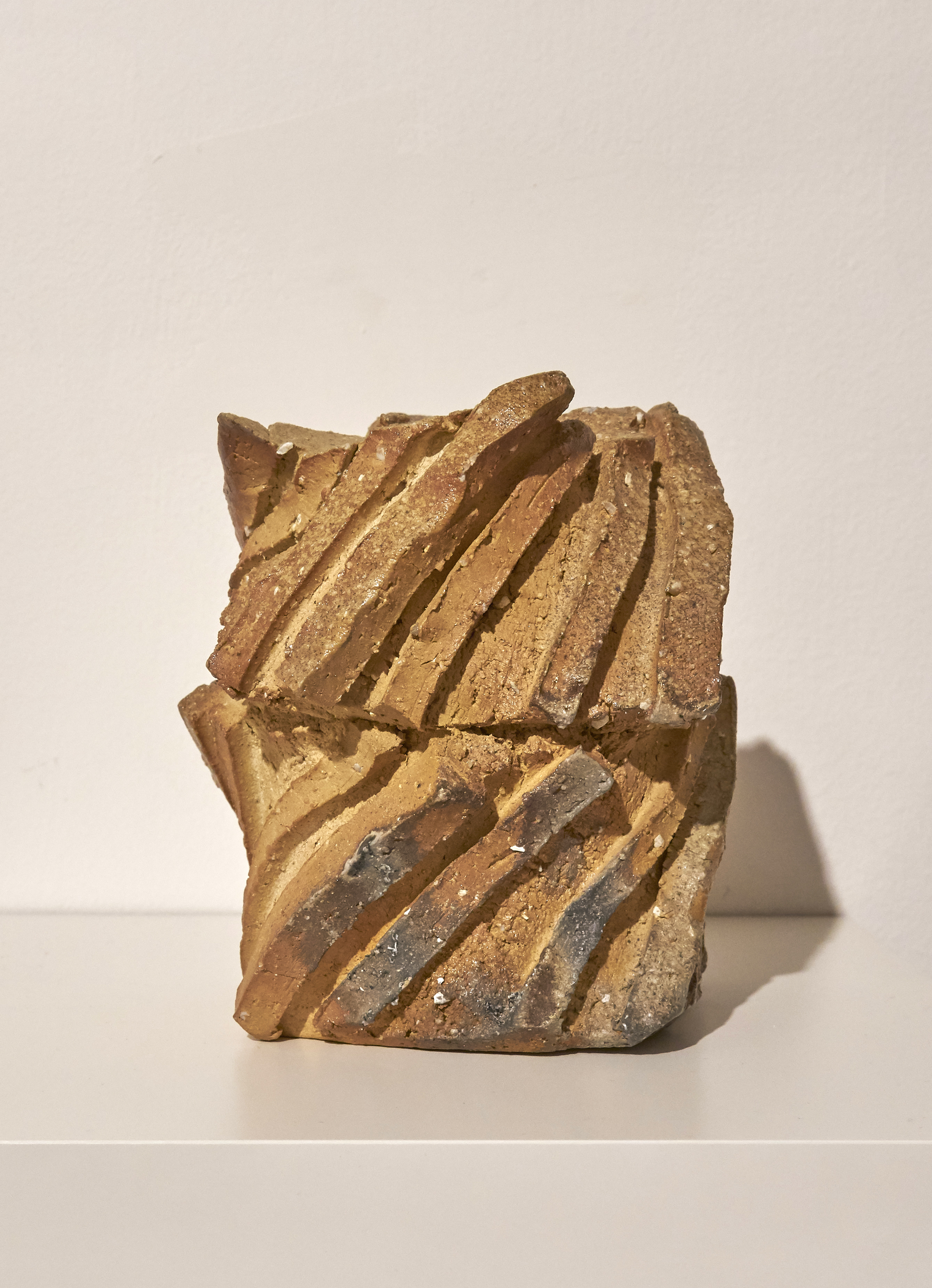
Alfredo Rodríguez, Carlos Fernández-Pello, Casa Josephine, Eduardo Sarabia, Fernando Renes, Joel Blanco, Julia Llerena, Little, Los Bravú, Lucas Marcos, Lucas Muñoz, Luis Pérez Calvo, Marta Fernández-Calvo, Mateo Maté, Miguel B., Miki Leal, Miquel Barceló, Pablo Barreiro, Shozo Michikawa, Xavier Monsalvatje.
KANTHAROS
Las formas de producción artísticas se han alterado con la irrupción de las nuevas tecnologías, mo- dificando la forma en la que el artista se enfrenta a su obra. Todo esto conduce a un replanteamiento de cuestiones formales, tomando como punto de partida una reflexión sobre el objeto, su significa- do, materialidad y la forma de producción de éste.
Y es en este momento de aceleración continua donde nace la idea de “Kantharos”. La exposición pretende que se produzca un descenso en el ritmo de creación de los artistas participantes, para plantearles la necesidad de generar un elemento que nos conecta con nuestro pasado más ances- tral: una vasija, un jarrón, en definitiva un elemento con capacidad de contener, de albergar, de abra- zar. De la necesidad de ver como se enfrentan veintidós artistas del mismo panorama sociocultural a un problema tan sencillo, pero que puede llegar a ser tan poético y rico como merecedor de una exposición.
LA CERÁMICA: UTILIDAD Y ARTE
Las producciones cerámicas son una de las creaciones humanas de mayor antigüedad, por las ne- cesidades domésticas de las poblaciones, hasta épocas recientes. Desde comienzos del siglo XX, su utilitarismo ha ido dando paso a finalidades artísticas y estéticas. No es que la estética y la impresión artística estuvieran ajenas a estos elementos de cultura material de la Humanidad, presentes en todas las culturas, pero lo utilitario predominaría en su fabricación.
Sin embargo, los primeros objetos modelados en barro fueron documentados en el período Gravetien- se, en el Paleolítico Superior, y estaban relacionadas con lo sagrado. Eran representaciones pequeñas de Diosas Madres, como la Venus de Dolní Vestonice, datada entre 29.000 y 25.000 a.C.
Sin embargo, la gran eclosión cerámica se produce durante el Neolítico (6.000 a.C. al 3.000 a.C.), producto de la aparición de sociedades agrícolas y ganaderas en sustitución de las cazadoras y reco- lectoras. Al ser necesarios recipientes para almacenar el excedente de las cosechas y los productos ganaderos, se produjo una amplia gama de piezas de diversos tamaños y finalidades. Es una cerámica a mano, con decoraciones variadas, como la impresa y la cardial, típicamente mediterránea cuya im- presión se efectuaba con la concha de un berberecho.
La producción cerámica se extiende por los periodos de la Edad del Bronce y del Hierro, en el cual los fenicios introducen el torno en la Península ibérica. Se produce una revolución y aparecen en el Mundo ibérico y celtibérico, cerámicas a torno y pintadas con motivos decorativos de diversos significados. Ahí podríamos distinguir entre cerámica y alfarería, incluyendo la primera todas las técnicas de fabri- cación con el empleo de arcilla, y la alfarería, técnica para fabricar objetos de cerámica en un torno o rueda giratoria.
VALVERDE +1: KANTHAROS
Un proyecto de Espacio Valverde y Galería SEISMASUNO.
Fue en Atenas donde se empleó el término keramiké (cerámica) para estas producciones, con mag- níficos ejemplos de cerámicas de figuras negras y figuras rojas, exportadas a todo el ámbito Medite- rráneo. Roma influirá en estas fabricaciones con sus terras sigillatas o cerámicas selladas, expandidas por el Imperio romano.
Durante la Edad Media los prototipos varían, estando muy influida la producción cerámica por técnicas moriscas, como las cerámicas de Teruel, Paterna y sobre todo las de reflejo dorado de Manises. Con la llegada del Renacimiento se producen magníficas cerámicas en España, en los novedosos hornos de Talavera de la Reina, autora de cerámicas como la tricolor y polícroma, y Puente del Arzobispo (To- ledo), en las que en la segunda se empleaba el torno morisco caracterizado porque la rueda inferior o volandera va en el subsuelo. En la actualidad, el Museo de Cerámica Ruiz de Luna, de Talavera de la Reina, conserva producciones antiguas y las procedentes de Guijo y Ruiz de Luna, ya en el siglo XX.
Fueron dos ejemplos maravillosos de producción española, sustituidos en el siglo XVIII por la del Con- de de Aranda en su villa de Alcora (Castellón), de 1727 a 1858. Quería conseguir piezas más lujosas para la decoración de los nuevos palacios y consiguió la porcelana de pasta dura. Esto era algo que ambicionaban todas las cortes europeas después del descubrimiento de la primera porcelana dura producida en Europa, en Meissen (Sajonia) por Böttger. No fue sencillo, aunque desde los siglos XVI y XVII se disponía de piezas de estas características, pero se ignoraba su fabricación, porque en el mun- do de las porcelanas chinas y japonesas imperaba un profundo secretismo. Desde entonces, y bajo el patrocinio de los reyes europeos, surgieron manufacturas como las de La Moncloa (Madrid), inspirada en formas francesas y corrientes decorativas inglesas de estampación; Sévres, Viena, Capodimonte y Buen Retiro, entre otras.
A lo largo de los siglos XIX y XX continuaron las producciones de loza de la Cartuja de Sevilla, por el Marqués de Pickman; de Triana; la serie tricolor de Úbeda (Jaén); Sargadelos (Galicia); o Valdemorillo (Madrid) que surtía a la Casa Real en época de D. Alfonso XIII, entre otras. Podríamos hablar de otras muchas casas productoras de cerámica, pero el dinamismo fue tan grande que sería prolijo hacerlo en el breve espacio de estas páginas.
En esta muestra, que contemplamos hoy, podemos tener el privilegio de conocer piezas muy singula- res, algunas antiguas y la mayoría producto del arte cerámico más actual. Es una gran responsabilidad para sus autores presentar estos ejemplos que nos informan sobre las formas de las piezas en sí, de la creatividad intrínseca, de la lucha sin tregua con la materia, pero también de la sociedad en que vivimos que, como todas las anteriores, está muy involucrada con el arte actual.
Julio González Alcalde Dr. en Geografía e Historia Conservador del Museo Nacional de Ciencias Naturales