Unas palabras
LOS NÁUFRAGOS, NADIE
por Joaquín Jesús Sánchez
Siempre ha habido incompetentes. Un tal Chaumareys, de profesión vizconde, se las arregló para comandar una flotilla con destino a Senegal. Llevaba a un filósofo como asesor, decisión que suele acarrear grandes calamidades. Guiado por la ignorancia y las prisas, encalló su fragata en un banco de arena: su metafísico había confundido unos nubarrones con el puerto de Cabo Blanco.
Para colmo de desgracias, se desató un temporal. En un último acto de heroísmo, el capitán embarcó junto a su séquito en los pocos botes disponibles y amontonó al resto del pasaje en una balsa armada con sogas y tablones. Aunque intentaron remolcarlos hasta la costa, tan pronto la mar se puso brava cortaron los cabos y les desearon buena suerte. Casi ciento cincuenta personas quedaron a la deriva, pertrechadas con un paquete de galletas y vino en vez de agua. El armatoste medía unos veinte metros de largo por siete de ancho. La primera noche murieron veinte a causa de la desesperación y las riñas. Para la cuarta jornada, la tripulación había menguado a la mitad. Otro barco del convoy los encontró doce días después de pura casualidad: no conocían el rumbo de Chaumareys y nadie había ordenado ningún rescate. Quedaban quince.
Uno puede pasearse por las salas rojas del Louvre y contemplar el cuadro que Géricault dedicó a la tragedia sin enterarse de la catástrofe. Es un cuadro mastodóntico (casi cinco metros por siete) y amarillento, como si estuviese alumbrado con esas bombillas que ponen en las pescaderías. El pintor compuso la escena con cuerpos de cadáveres (modelos involuntarios) a los que superpuso la jeta de sus amigos. Leo que el de abajo a la izquierda es Eugène Delacroix. Menuda fechoría: profanan tu cuerpo y el crédito se lo lleva otro.
Para documentarse, Géricault se entrevistó con dos supervivientes. Savigny y Corréard (respectivamente, médico e ingeniero) publicaron una memoria del desaguisado que se convirtió en un pequeño éxito editorial. En las primeras páginas, incluyeron un esquema de la balsa, pintada del natural. El Louvre conserva muchos materiales preparatorios del cuadro. En uno de esos papeles se ve a un caníbal alimentándose mientras otros pasajeros se pelean. Sin embargo, el pintor decidió cambiar la violencia por abatimiento y desesperación. Las víctimas, ya se sabe, no deben contener trazas de inmoralidad. La escena pintada resulta extrañísima, casi mitológica (esto es, extemporánea). En la franja inferior, un hombre mira resignado las honduras del mar, que es la muerte. Lleva un harapo como velo, al modo de los pontífices imperiales. En el otro extremo, sus compañeros agitan los brazos al divisar un barco (apenas una mota) en el horizonte. Los personajes se abalanzan unos sobre otros en una coreografía ineficiente: algunos, más que pedir socorro, saludan a la espalda del que tienen delante. Las pieles, en vez de enrojecidas y cuarteadas, tienen un aspecto blanquecino y exangüe. En la proa, un haitiano agita un pañolón (todos los negros del cuadro son un mismo modelo, un tal Joseph le negre, cuya biografía se agota en el epíteto). La pose remeda a la de esos tritones del barroco que tocan la caracola en las fuentes romanas.
La pintura histórica es un acreditado engañabobos. Todos los esfuerzos de Géricault (incluido, el de soportar el hedor de la morgue en la que convirtió su estudio) nos distraen, una y otra vez, del hecho representado. Tampoco ayuda que el barco se llamase Meduse. Repasando la tela, uno se acuerda de los cuerpos serpenteantes que trepan como sabandijas en el grabado de Doré sobre el diluvio, de Menelao sosteniendo el cuerpo inerte de Patroclo o, incluso, de la pose meditabunda del ángel de la melancolía que dibujó Durero. ¿De los náufragos? Nadie. Los del cuadro podrían ser cualquiera, menos los que fueron.
***
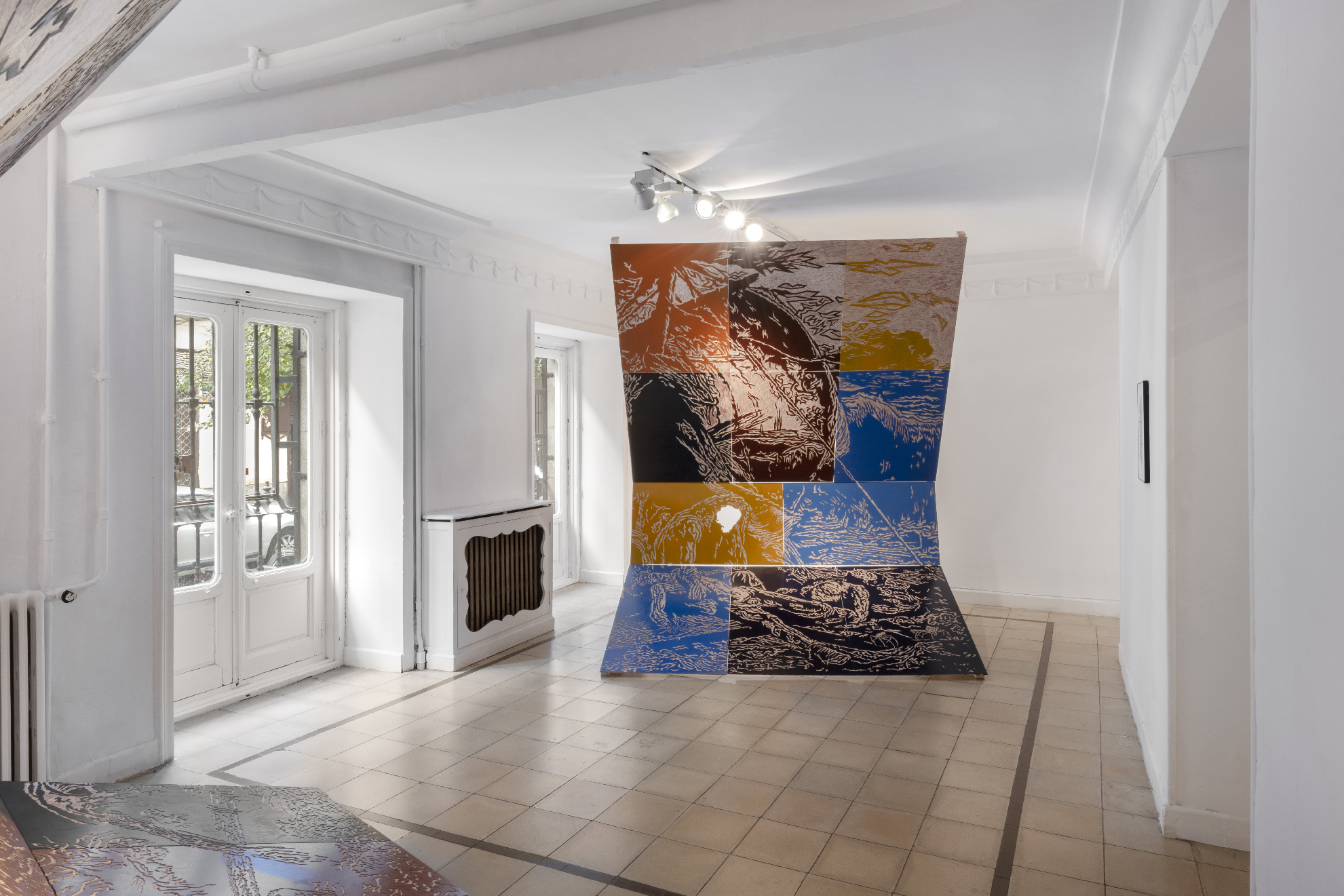
Clara Carvajal expone en Espacio Valverde una versión xilográfica de La balsa de la Medusa. Para ello, ha compartimentado el cuadro y ha reproducido la escena mediante esa línea crepitante y angulosa que permite la gubia. Las planchas se han instalado sobre una estructura, al modo de una escenografía. La alternancia cromática (consecuencia del entintado para su estampación) causa una disonancia refuerza la extrañeza de la escena representada.
Los rostros de los protagonistas han quedado vacíos y en las estampaciones aparecen coloreados de rojo. En el envés de la instalación, la artista ha dibujado la silueta de unos cuerpos que se asoman por las caras. Queda su rastro.
Una escena colorista, en la que aparecen animales marinos, añade un elemento de vitalidad al conjunto. Sin duda, la mayor beneficiaria del naufragio fue la fauna local. No hay mal que por bien no venga, la vida sigue, etcétera, etcétera.