Unas palabras
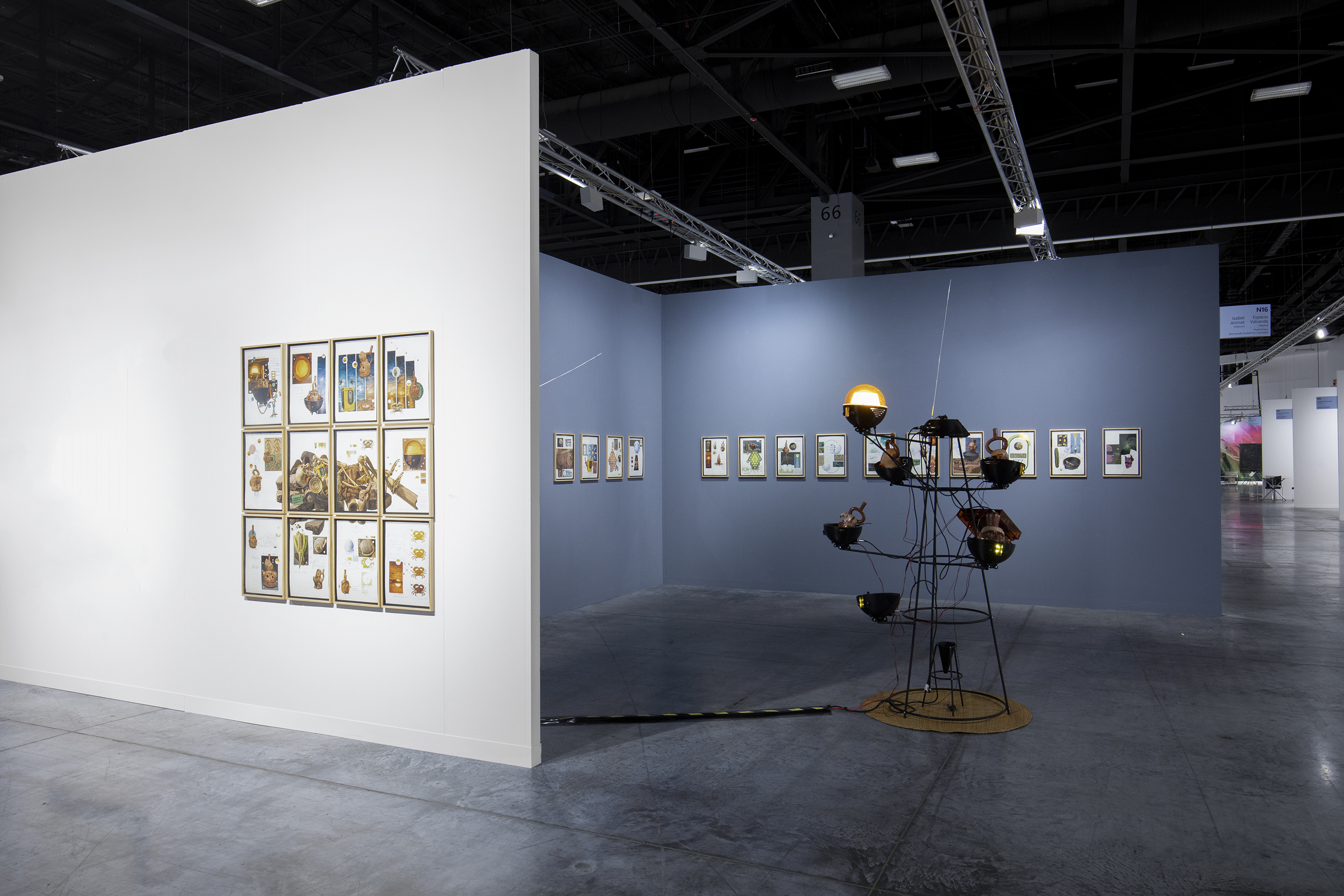
En el corazón de Proyecto Checán se encuentra “Checán Estéreo”, una instalación sonora/altar interactivo diseñado por Huanchaco para comunicarse con los ancestros a través de la lengua Muchik (idioma mochica). Este dispositivo fue construido a partir de una grabación de la última persona que habló Muchik, registrando 53 palabras de esa lengua extinta, desaparecida a comienzos del siglo XX. Huanchaco recupera estas palabras y las asigna a una consola de botones, permitiendo que el aparato active y combine el vocabulario para generar nuevas frases y sonidos.
El objetivo principal de esta instalación es devolver una voz a una serie de huacos retrato —vasijas cerámicas mochicas con rostros humanos— que hoy se encuentran descontextualizadas (y probablemente afligidas) en museos y colecciones privadas de Perú y del mundo.
Al presionar los botones de la consola, el público —o el propio artista— “saluda” a los huacos con frases sencillas en Muchik, como “buenos días” o “toma tu chicha”, estableciendo una nueva relación con estos objetos ancestrales. “Los huacos han sido pensados como objetos, pero son seres. Representan un poder, una energía. Debemos reflexionar desde qué posición nos conectamos con ellos”, explica Huanchaco. Esta afirmación encapsula el concepto: humanizar o reanimar piezas precolombinas mediante el lenguaje y el sonido, invitándonos a repensar nuestro vínculo con el pasado indígena.
De este modo, Huanchaco transforma la cerámica en algo más que un artefacto arqueológico: deja de tratarla como un “fetiche” museológico y reconoce su agencia ancestral, es decir, una presencia viva capaz de interactuar simbólicamente con nosotros. El dispositivo Checán Estéreo funciona como un puente tecnológico-ritual entre tiempos y culturas. Cada aparato en la sala sostiene lámparas que evocan el ciclo solar (el ocaso), integrando la tecnología dentro de un contexto ceremonial. Visualmente, la instalación mezcla elementos de arqueología y tecnología, utilizando impresiones 3D, metacrilato, altavoces y circuitos electrónicos incrustados en una estructura que evoca tanto un laboratorio experimental como un altar sonoro. El espacio se completa con una serie de pinturas sobre papel que actúan como diagramas del proyecto, ilustrando la relación entre los huacos, la lengua Muchik y las posibilidades de una comunicación transhistórica.
El proyecto cuestiona la epistemología occidental y la manera en que ha tratado los objetos culturales andinos, creando un espacio a la vez lúdico y crítico, que fomenta la reflexión sobre la interacción entre los sistemas de conocimiento occidentales y sus objetos de estudio no occidentales.
En otras palabras, la exposición busca reimaginar la relación con las culturas prehispánicas, reconociendo la mezcla de temporalidades y descartando la noción de una pureza ancestral intacta.