Unas palabras
FIGURAS EN FUGA
un diálogo con la materia y la memoria
NICOLÁS CAMINO
La pintura es, en esencia, un acto de descubrimiento. Cada cuadro se construye no desde la certeza, sino desde la apertura a lo imprevisto. La materia es la que dicta el rumbo: los pigmentos, extendidos sobre el lienzo como si fueran polvo antiguo, revelan formas antes de que la intención las defina por completo. La imagen no se impone desde el principio; más bien, se encuentra en el proceso, emergiendo de lo accidental, de lo que se filtra, de lo que resiste.
En esta serie de obras, la pintura se despliega en un lenguaje que es al mismo tiempo táctil y evocador. No hay artificio ni adorno innecesario, solo la presencia de la materia, con su textura cruda, con su relación profunda con la tierra. La mayor parte de los cuadros están construidos a partir de pigmentos puros, con apenas algunas pinceladas de óleo en momentos clave: el rostro de un papa, la mirada de un músico, el contorno de una figura que, en su nitidez, parece condensar la historia que la rodea. Son trazos mínimos en un océano de pigmento, gestos que iluminan la composición sin traicionar su espíritu esencial.
Los colores no son casuales. Son tierras, ocres, sombras profundas que remiten a un paisaje que no solo es físico, sino también simbólico. En ellos hay una geografía personal, una España que se despliega en la memoria: el campo abierto, la vastedad de los espacios naturales, la luz que es siempre protagonista en la pintura de este país. No es una representación literal del paisaje, sino una resonancia de su esencia, de su temperatura, de su peso en la mirada.
Figuras que flotan entre el tiempo y la historia
Si la materia es el punto de partida, las figuras son el eco de una conversación que atraviesa los siglos. Algunos de los personajes que aparecen en estos cuadros son homenajes, presencias que han dejado su huella en la historia del arte o en la sensibilidad del artista. Paco de Lucía, con su guitarra como extensión de su propio cuerpo, no es solo un músico, sino un símbolo, un latido de la cultura española que trasciende el tiempo. El Papa Inocencio X, cuya imagen inmortalizó Velázquez y luego deformó Bacon en su búsqueda de lo insondable, aparece aquí como una figura que dialoga con ambas tradiciones, atrapado en la tensión entre la solemnidad y la distorsión.
Pápa Inocencio X - 198 x 147 cm
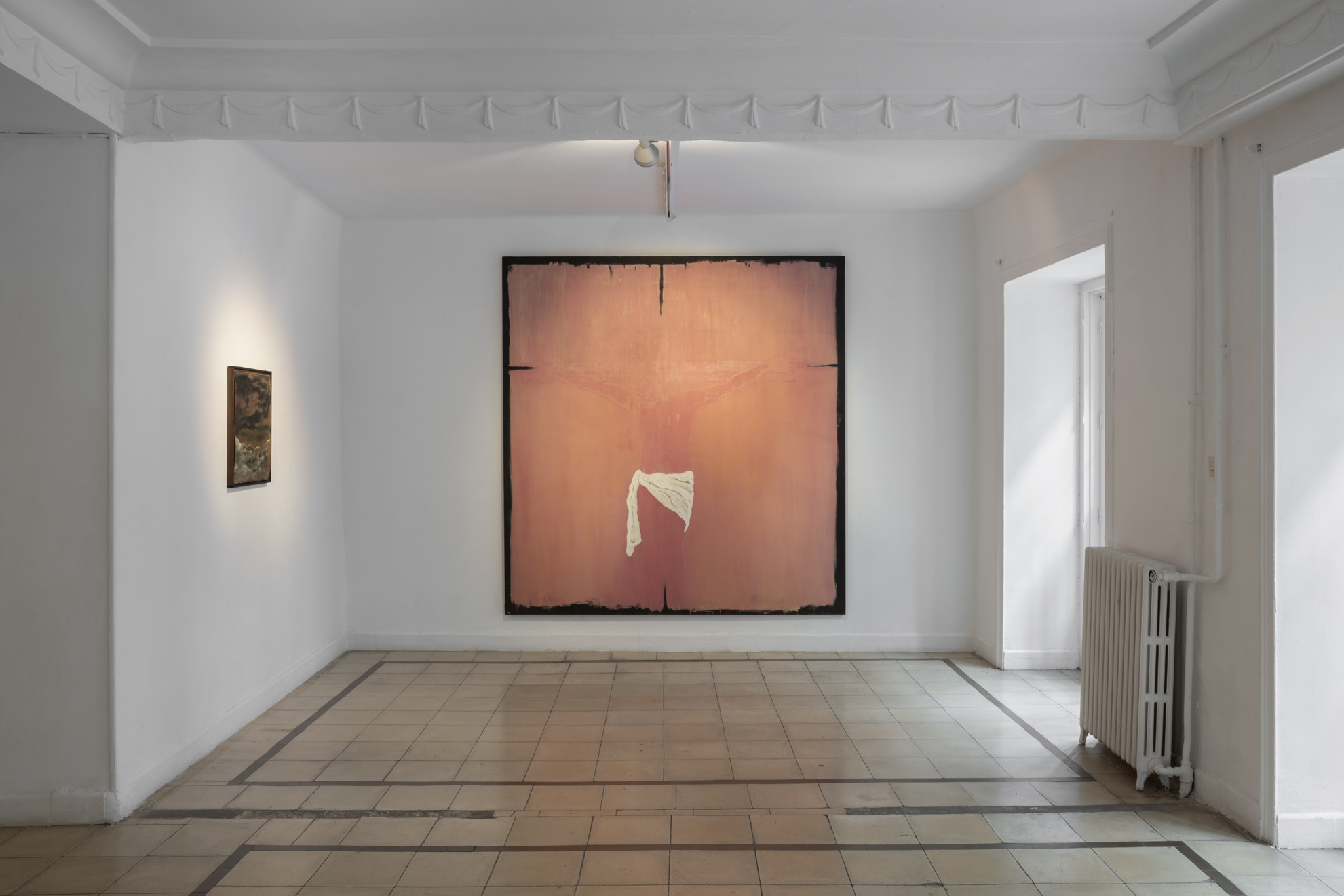
Vivimos en un mundo quizás algo desnortado, donde la prisa y el artificio levantan una pantalla que nos impide ver. Todo es inmediato, ligero, sin peso. Pero hay símbolos que resisten, aunque los cubran, aunque parezcan desvanecerse. En el Cristo pintado con la técnica del “pentimenti”, la figura queda oculta bajo una capa de color, pero nunca desaparece del todo. La imagen, en lugar de fijarse de manera definitiva, permanece latente, filtrándose con el tiempo. Persiste, como ciertos símbolos que, a pesar de todo, siguen reclamando su espacio en la memoria.
Cristo – 240 x 2
Pero junto a estas figuras reconocibles, hay otras que pertenecen a un mundo más ambiguo. En los cuadros de menor formato, los personajes son pequeños, diminutos frente a la inmensidad que los rodea. No vienen de la historia ni de la memoria colectiva, sino de un espacio más incierto: son apariciones que surgen en el proceso, imágenes que emergen como si hubieran estado esperando ser vistas. Su técnica responde a este carácter fugaz: primero están en el reverso del lienzo, y solo después se revelan en la superficie, como si la pintura fuese un acto de excavación, un encuentro con lo que ya estaba ahí, oculto en la tela.
Estas figuras solitarias habitan paisajes abiertos, espacios que no han sido domesticados, donde la naturaleza es la que impone su presencia. Son presencias que no terminan de asentarse, que parecen a punto de desaparecer o de integrarse en el entorno. No están enraizadas en la tierra, sino en tránsito, en un punto intermedio entre lo material y lo etéreo. Su relación con el mundo que habitan es incierta: no pertenecen del todo, pero tampoco están ausentes. Son presencias espectrales, fragmentos de una historia que no se cuenta con palabras, sino con silencios y vacíos.
En este tránsito entre la materia y lo intangible, una de las figuras más enigmáticas es el hombre de espaldas que sostiene una sábana. No es una tela cualquiera, sino la Sábana Santa de Turín, el sudario que, según la tradición, envolvió el cuerpo de Cristo.
La sábana santa de Turín – 198 x 147 cm
En este cuadro, la sábana no es solo un objeto físico, sino un velo entre dos mundos, una membrana entre la presencia y la ausencia. La figura que la sostiene no muestra su rostro, como si su identidad fuese irrelevante frente al peso simbólico del lienzo que tiene entre las manos. Es un gesto de ofrenda o de duda, una imagen detenida en el instante en que lo humano se encuentra con lo sagrado.
El arte como hallazgo
En esta pintura, no hay planificación rígida ni destino predefinido. La imagen se encuentra en el camino, en el roce entre la intención y el accidente. Es un proceso que recuerda a una jam session musical, donde los intérpretes tienen un ritmo o una estructura que los guía, pero lo que sucede en el desarrollo es completamente espontáneo. En estos cuadros hay un orden, una lógica que subyace en el color, en la composición, pero dentro de ese marco la pintura se deja llevar por el azar, por lo que emerge en el momento. No hay una corrección constante ni un intento de controlar la imagen desde el principio, sino una entrega a la improvisación dentro de un esquema intuitivo.
Las figuras que habitan estos cuadros no son simples representaciones: son vestigios, arquetipos, presencias que resuenan con la historia del arte y con la cultura de un país. Algunas emergen de la tradición, otras de la imaginación, pero todas comparten un mismo carácter: están a medio camino entre lo tangible y lo evanescente, entre el peso de la tierra y la ingravidez de la imagen.
Uno de los arquetipos más poderosos de esta serie es la figura femenina que reinterpreta a la Dama de Elche y a la Dama de Baza. Dos iconos de la cultura ibérica que, aunque separadas en su origen, aquí se funden en una sola presencia. El hieratismo de la Dama de Elche, con su mirada impenetrable, se mezcla con el reposo y la serenidad de la Dama de Baza, que aparece sentada, con la dignidad de quien pertenece a un tiempo antiguo pero todavía palpitante. Esta fusión no es solo una reinterpretación arqueológica, sino una forma de conectar lo que sabemos y lo que imaginamos de estas figuras, de restituirles una continuidad que la historia fragmentó. En este cuadro, ellas no son piezas de museo, sino presencias vivas, guardianas de una memoria que se resiste a desaparecer.
Y en su mano, la Dama de Baza sostiene una paloma, símbolo de riqueza y fertilidad en su época. La escultura original la tuvo alguna vez, pero el tiempo la despojó de ella. Aquí, la paloma regresa, como un eco de lo que fue, como una reivindicación de la imagen completa. En este gesto, la pintura no solo reconstruye lo que se ha perdido, sino que reactiva su significado, lo trae de nuevo al presente para recordar que los símbolos nunca desaparecen del todo, sino que esperan ser reencontrados.
Las Damas de Elche y de Baza – 197 x 137 cm
En este sentido, estas pinturas no son solo composiciones visuales, sino territorios donde lo antiguo y lo nuevo, lo concreto y lo indefinido, lo presente y lo ausente, se encuentran en un equilibrio frágil. Son, en última instancia, un espacio de revelación, donde la materia y la memoria se funden en una misma visión.
Nicolas Camino – Madrid 2025