Unas palabras
Historias de tejedoras
por Estrella de Diego
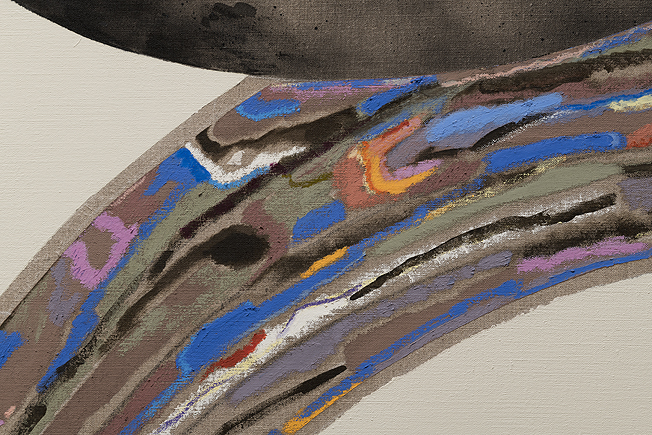
La mirada se detiene sobre la superficie pictórica y por un instante tiene la impresión de encontrarse frente a un extraño collage de telas superpuestas y luego recortadas –un ángulo, un trozo, una tira, un patrón rescatado, una textura, un gesto… El peculiar malabarismo de retales va creando una sensación poderosa de tejidos, una suerte de inesperado tapiz que se aleja pero solo en apariencia de los dibujos de hace algunos años, cuando los diálogos entre atisbos figurativos y extraños alfabetos de Pepa Prieto incitaban a la memoria a correr hacia Henri Michaux, poemas visuales, escrituras dibujadas, que a cada paso reenviaban a cierto automatismo irrefrenable, el de los inconscientes que se agolpan indecisos en cada pensamiento. Son los vestigios de esas historias que Prieto camufla tras las abstracciones en sus cuadros con mucho de ventanas abiertas y de recuerdo, sus recuerdos que, como ella explica, vuelve a alinear en la superficie de las telas para que tengas vidas nuevas, historias nuevas.
También los recuerdos se componen de retales y tienen mucho de collage, de narrativa abierta a la complicidad. Se asoman. Es el requerimiento de la artista: nos quiere cómplices, dispuestos de ver más allá de la apariencia abstracta e imaginar las formas renovadas como exige Henri Michaux. Prieto espera que retomemos esos recuerdos alineados para recomponer los nuestros propios, pues al fin y al cabo toda memoria está compuesta de superposiciones y montajes, incluso fílmicos. Pero que nadie se lleva a engaño porque el trabajo de Pepa Prieto es todo menos automático, entendido a la manera tradicional. Parece sobre todo parte de la fabulosa trampa de Un perro andaluz de Buñuel que no es un sueño: que reproduce la estructura del sueño con un montaje sin resquicio de azar.
De igual modo los cuadros de Pepa Prieto reproducen un juego esmerado de eventualidades que no lo son en absoluto, entre otras cosas porque en sus propuestas encima de la tela trabaja desde dos materiales antitéticos –óleo y acrílico-, que no le permiten conocer de antemano el resultado. No caben los errores y si se cuelan hay que empezar desde el principio. Otra vez. Así es el malabarismo: en el entramado de un tejido –y de un sueño- las superficies van aflorando sorprendentes, incluso para la autora. En estos impecables primeros planos de los ricos tejidos, los que muestran el esmero de los colores y unas formas que reenvían a otras formas, de pronto escucho las historias que los tejedores van soñando y contando a medida que tejen, a medida que las formas aparecen sobre la superficie, como en el sueño. Entonces lo abstracto reenvía a la rememoración y las formas se expanden hacia el fondo invisible.